The Strait to come
In 2015 an Asian brown alga, Rugulopteryx okamurae, appeared in Ceuta. Within a few years it covered the rocky bottoms of both shores, displaced entire communities and filled the beaches with thousands of tonnes of wrack. It is the largest ecological change the Strait has seen in a decade, and the open data barely records it.
This page shows both things at once: which species have arrived, and how many openly licensed observations each has in the area. The distance between the two columns is the size of the gap Bioestrecho has to fill with agreements, with REDIAM and with its own observation.
When they arrived
Each species placed on the year of its first record in the area. A dot is a known year; a band, an approximate decade; an arrow, an arrival before the series.
Non-native species of the area and open observations per year
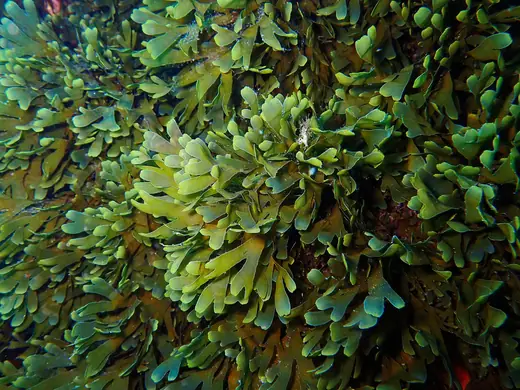
Photo: Donald Davesne, CC BY Alga
Asian brown alga
Rugulopteryx okamurae
The greatest recent transformation of the Strait's rocky seabed. The first alga in the Spanish Catalogue of Invasive Alien Species.
- First record
- 2015 (Ceuta)
- Open observations
- 9
4Per year, 2010–2026 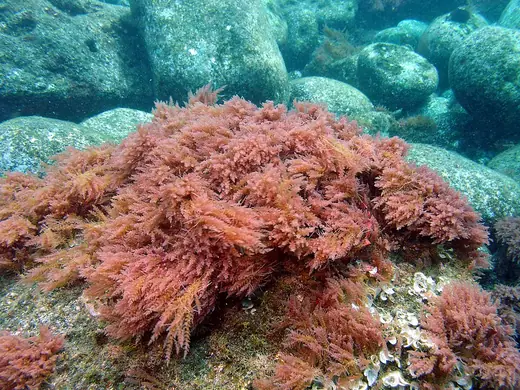
Photo: Neto AIA, Prestes ACL, Azevedo JMN, Resendes R, Álvaro NV, Neto RMA, Moreu I (2020) Marine algal flora of Formigas Islets, Azores. Biodiversity Data Journal 8: e57510. https://doi.org/10.3897/BDJ.8.e57510, CC BY 4.0 Alga
Harpoon weed
Asparagopsis armata
Established on both shores; forms seasonal mats in spring.
- First record
- 20th century
- Open observations
- 15
7Per year, 2010–2026 
Photo: Andre Hosper, CC BY Alga
Tropical Asparagopsis
Asparagopsis taxiformis
A warm-water species; its spread accompanies the tropicalisation of the Mediterranean.
- First record
- 2000s
- Open observations
- 3
1Per year, 2010–2026 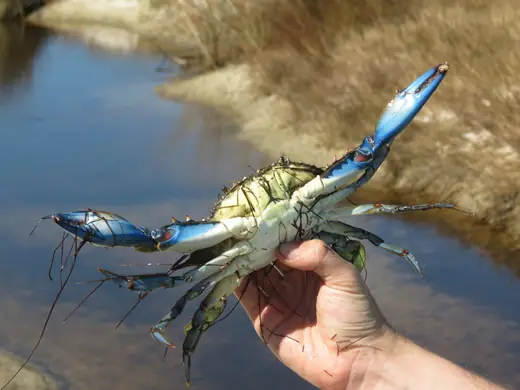
Photo: Reuven Martin, CC0 Crustacean
Blue crab
Callinectes sapidus
Arrived from the eastern Mediterranean; already in the Palmones estuary.
- First record
- 2021 (bay)
- Open observations
- 30
21Per year, 2010–2026 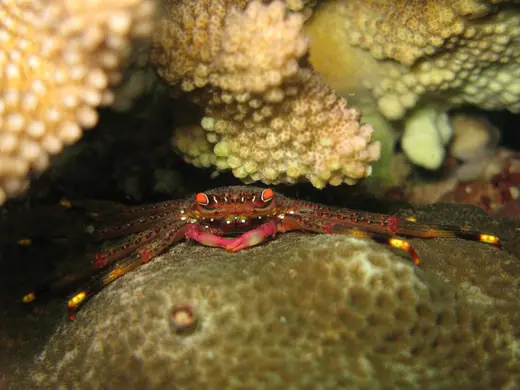
Photo: Silke Baron, CC BY Crustacean
Sally Lightfoot crab
Percnon gibbesi
Frequent on breakwaters, although the open data for the area does not record it.
- First record
- 2000s
- Open observations
- 0
No open records in the area across the whole series. 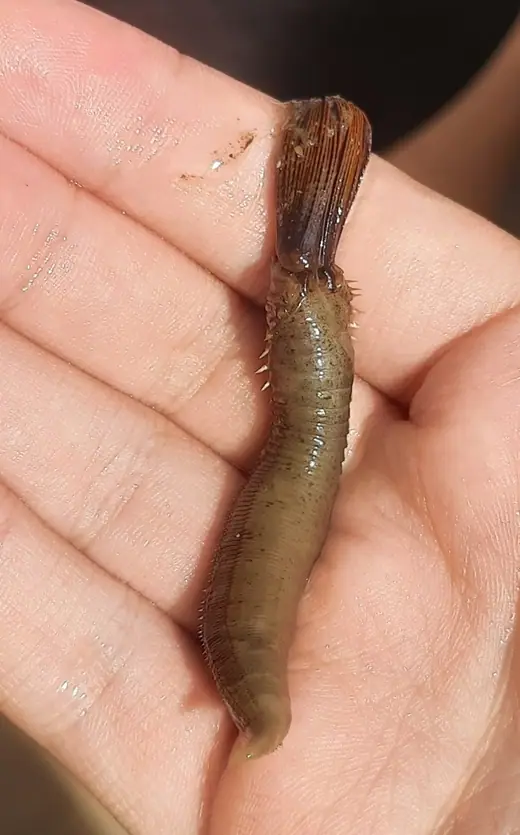
Photo: Paulo Nogueira, CC BY Annelid
Feather duster worm
Branchiomma luctuosum
A coloniser of harbours and moorings; typical of port waters.
- First record
- 2019
- Open observations
- 3
111Per year, 2010–2026 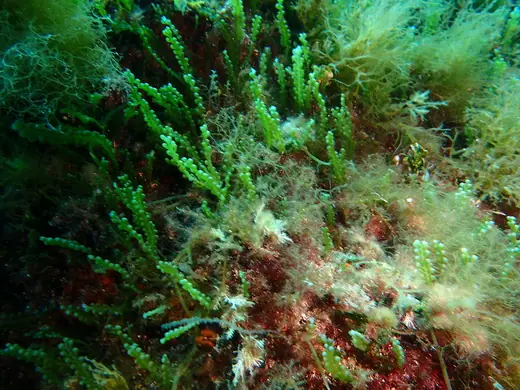
Photo: Julien Renoult, CC BY Alga
Caulerpa
Caulerpa cylindracea
Widespread in the Mediterranean; no open observations in the area, which says more about the data than about the alga.
- First record
- 2000s
- Open observations
- 0
No open records in the area across the whole series.
CC0 and CC BY records in the extended area, GBIF. Few records for a species does not mean it is rare: it means nobody has uploaded it to an open database. First-occurrence dates come from the literature and from the Spanish Catalogue of Invasive Alien Species.